

Artificial intelligence (AI) is rapidly becoming a business essential for many organisations. Its wide-ranging capabilities, including analysing large datasets, automating processes, enhancing security measures, and assisting with decision-making, are transforming traditional business models.
From predicting stock market trends to monitoring crop health in agriculture, AI is rapidly infiltrating nearly every sector of the modern world as businesses exploit the many AI opportunities.
Unlike established governance programs like Information Security or Business Continuity, AI Risk Governance is still in its early stages. Consequently, many organisations struggle to navigate the complexities of implementing a robust, fit-for-purpose, and compliant program.
AI encompasses a continually evolving technological landscape in which there are trade-offs between scale, explainability, accessibility, speed, skills and cost.
Currently, we are in the calm before the AI regulatory storm, with both state and federal governments urging organisations to strengthen AI Risk Governance alongside their existing information security and risk management programs.
As we experienced with the Essential Eight cybersecurity framework, early adopters can gain a significant edge, signalling a commitment to security, longevity, and best practices to prospective customers.
Our research shows that Australia’s AI Risk Governance is largely shaped by ISO 42001 AI Management System and the NIST SP 800-160-1 Risk Management Framework. It’s only a matter of time before alignment with these standards and compliance with regulations becomes mandatory.
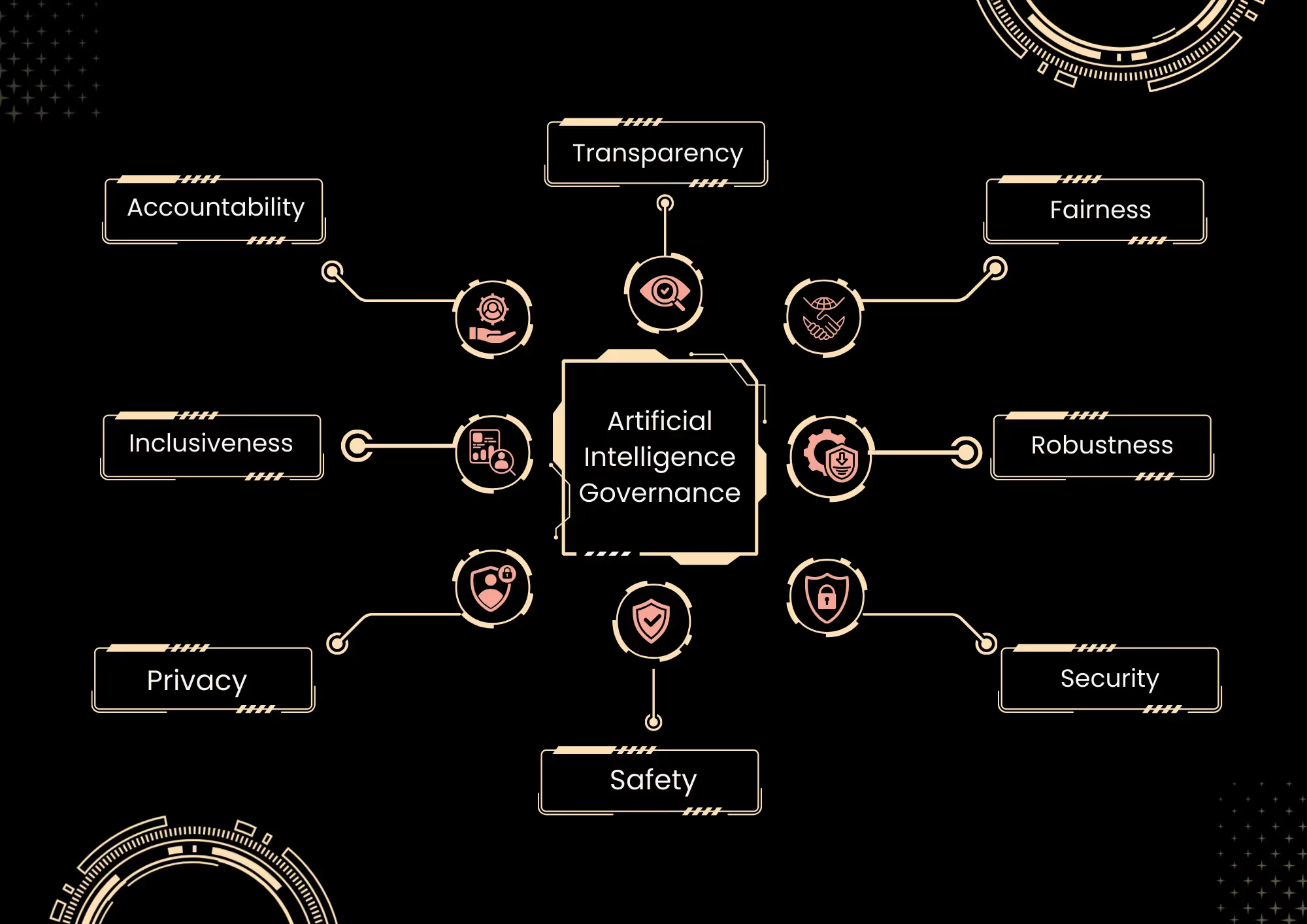
Why AI Risk Governance / Benefits
- Risk Reduction: AI Risk Governance systematically identifies, assesses, and mitigates AI threats, reducing the likelihood of breaches and financial losses. It integrates frameworks such as NIST and ISO to prioritise high-impact risks, ensuring proactive defence rather than reactive fixes.
- Regulatory Compliance: Organisations achieve compliance with standards such as NIST AI RMF, the EU AI Act, and Australia’s Voluntary AI Safety Standard through structured policies and reporting. This reduces penalties, streamlines audits, and demonstrates accountability to regulators and stakeholders.
- Business Resilience: Effective governance enables rapid incident response and recovery, maintaining operations during attacks. It fosters resilience through board-level oversight, clear roles, and continuous monitoring, turning cybersecurity into a strategic advantage.
- Efficiency Gains: By clarifying AI risks and aligning investments, AI Governance cuts resource waste and boosts operational efficiency. It promotes a security-aware culture, empowering teams and integrating cybersecurity strategies with business objectives.
Cyberverse Approach
Modern AI governance requires sophisticated platforms that can provide real-time visibility, automated compliance monitoring, and continuous risk assessment across complex AI ecosystems.
Cyberverse delivers comprehensive AI Security Posture Management (AISPM) capabilities that enable organisations to implement mature governance frameworks while maintaining operational efficiency.
- NIST-AI-600-1, Artificial Intelligence Risk Management Framework.
- ISO/IEC 42001:2023, Information technology – Artificial intelligence Management system.
- Australian Government’s Voluntary AI Safety Standard and proposed mandatory guardrails for AI in high-risk settings.
- NSW Government AI Assessment Framework (AIAF).
- Australian Prudential Regulation Authority (APRA) CPS220 – Risk Management, CPS230 – Operational Risk Management, and CPS234 – Information Security, as they pertain to AI.
Our Capabilities
- AI Governance Framework Design
- AI Governance Framework Uplift
- AI Risk Assessment
- AI Governance Audits