


Many organisations face challenges in governance due to policies, processes, and controls that are either too strict or too ambiguous. A universal governance framework often does not align with business operations, creating a disconnect between security measures and practical needs. Without well-defined exception management and risk-based decision-making, governance can hinder progress rather than facilitate it.
The 2022 Commonwealth Cyber Security Posture report indicates that just 32% of entities have fully implemented the Essential Eight mitigation strategies. Additionally, another report finds that only 11% of Australian directors believe their boards have a strong understanding of cyber risks, and only 17% say their boards are highly involved in cybersecurity strategy.
Cyber Governance provides the strategic framework for managing cybersecurity risks at an organisational level. It ensures alignment between security practices and business objectives while addressing compliance and board-level oversight.
Cyber Governance encompasses policies, processes, and oversight mechanisms that direct how organisations identify, assess, and mitigate cyber risks. It goes beyond tactical cybersecurity by integrating risk management, data privacy, and compliance into corporate decision-making, often drawing on frameworks such as NIST CSF and ISO 27001. This approach establishes clear accountability from the board to operational teams.
Strong Cyber Governance protects sensitive data and systems against evolving threats, reducing the likelihood of breaches and their financial impact. It fosters regulatory compliance, such as Australia's SOCI Act and Privacy Act, while building stakeholder trust through transparent risk reporting. Ultimately, it transforms cybersecurity from a cost centre into a strategic enabler for resilience and growth.
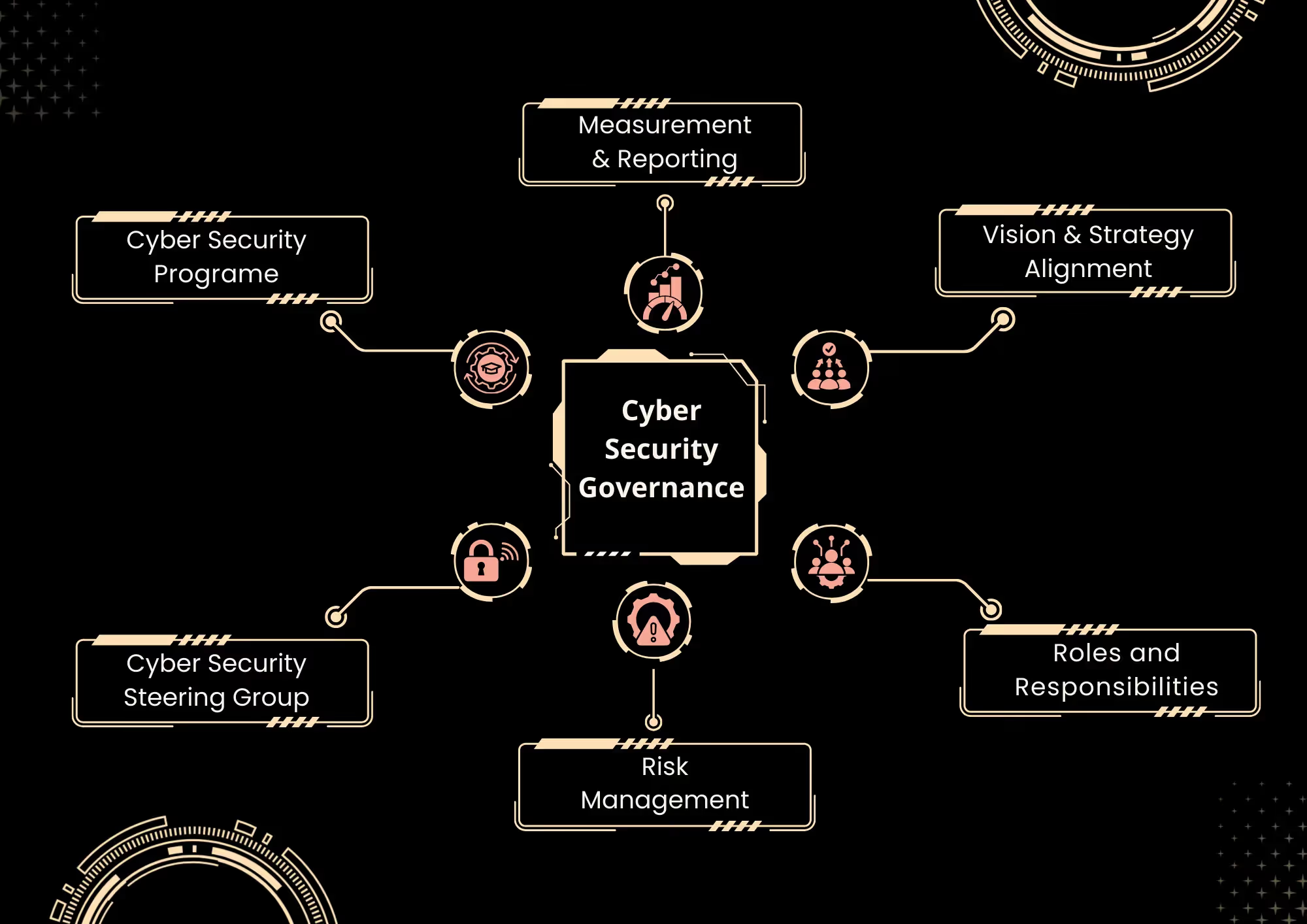
Why Cyber Governance / Benefits
- Risk Reduction: Cyber Governance systematically identifies, assesses, and mitigates cyber threats, lowering breach probabilities and financial losses. It integrates frameworks such as NIST CSF and ISO 27001 to prioritise high-impact risks, ensuring proactive defence rather than reactive fixes.
- Regulatory Compliance: Organisations achieve adherence to standards such as Australia’s SOCI Act, Privacy Act, and GDPR through structured policies and reporting. This reduces penalties, streamlines audits, and demonstrates accountability to regulators and stakeholders.
- Business Continuity: Effective governance enables rapid incident response and recovery, maintaining operations during attacks. It fosters resilience through board-level oversight, clear roles, and continuous monitoring, turning cybersecurity into a strategic advantage.
- Efficiency Gains: By clarifying cyber risks and aligning investments, Cyber Governance cuts resource waste and boosts operational efficiency. It promotes a security-aware culture, empowering teams and integrating cybersecurity strategies with business objectives.
Cyberverse Approach
At Cyberverse, we assist organisations throughout Australia and New Zealand in establishing strong governance frameworks and implementing them via integrated operational capabilities. Our services range from board education and policy development to ongoing monitoring and compliance management. We offer a comprehensive cybersecurity partnership that supports all levels of your organisation.
Our focus is on governance that supports business success rather than limiting it. We ensure that policies and processes are risk-based, regulatory-compliant, and practical for day-to-day operations. Additionally, we incorporate structured exception management to provide flexibility without compromising security oversight.
- Conduct a comprehensive Cyber Risk Assessment
- Establish a Cyber Governance Committee
- Develop and Implement Cyber Policies and Procedures
- Invest in Cybersecurity Training and Awareness
- Regularly Monitor and Review the Cyber Risk Management Program
- Ensure Strict compliance with Regulatory Requirements