


In a world of cyberattacks, outages and natural disasters, regulators and customers now expect more than ad‑hoc recovery—they expect demonstrable resilience. BCDR compliance provides structure and evidence for your continuity capabilities, demonstrating that you can protect people, data, and services even under severe disruption.
Business continuity and disaster recovery (BCDR) compliance is about demonstrating that your organisation can continue operating and quickly recover while meeting regulatory and contractual obligations during disruptive events.
A Business Continuity Plan (BCP) helps organisations maintain stability during risks like natural disasters or cyberattacks. It outlines how a company will operate during disruptions, ensuring employee safety and the continuity of critical operations. Without a BCP, these threats can disrupt business operations at any time, impacting revenue and damaging reputation.
Regulatory compliance is essential for business continuity planning, ensuring organisations meet requirements to safeguard operations. This involves assessing risks like natural disasters and cyber breaches. Senior management oversees execution, demonstrating a commitment to compliance.
Aligning planning with regulations ensures preparedness for disruptions. Effective communication manages stakeholder expectations and transparency. Compliance in continuity planning protects operations, meets standards, and builds trust. Integrating regulations into BCP development ensures resilience during disruptions.
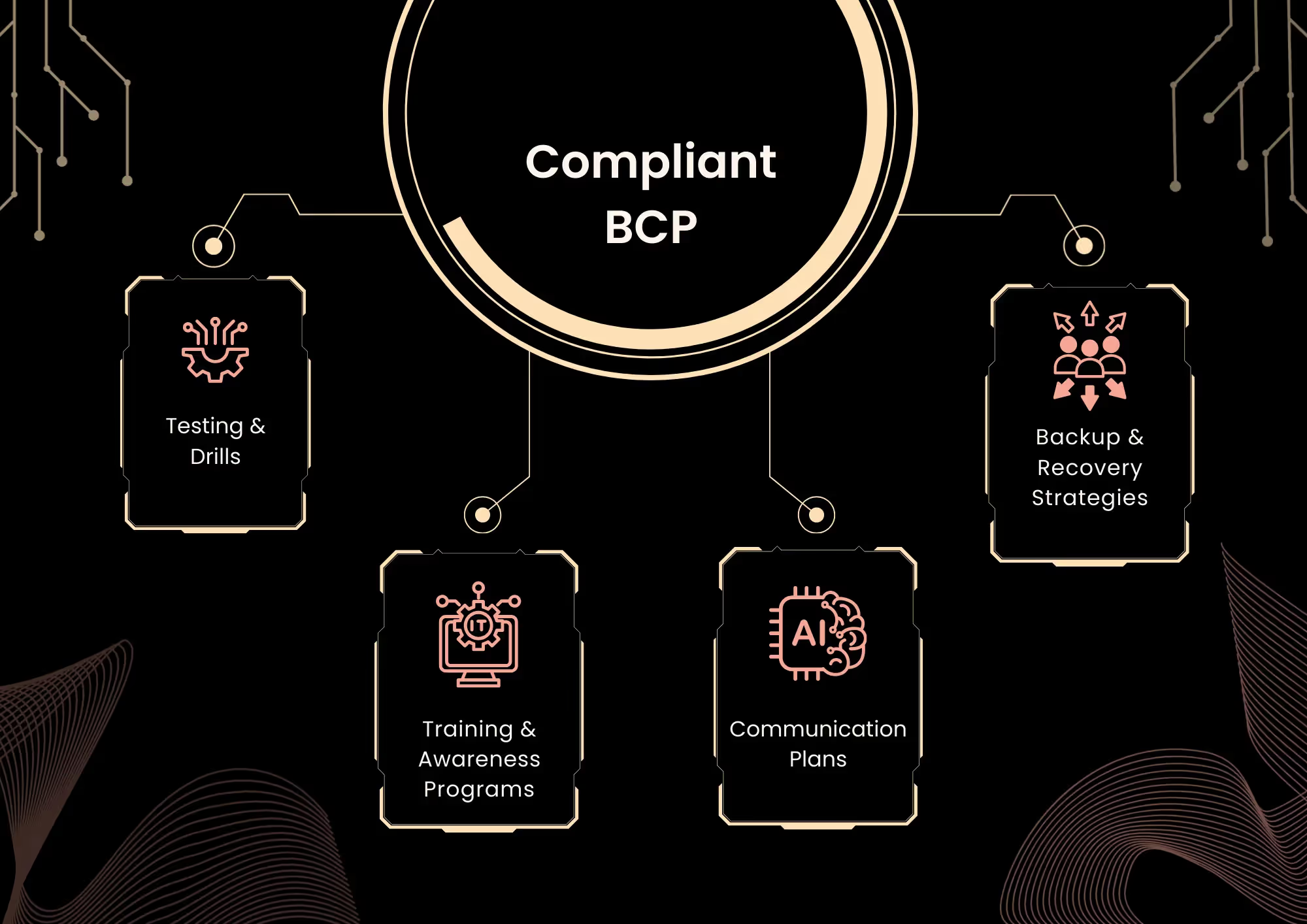
Why BCDR / Benefits
- Regulatory compliance: With a BCP, your clients demonstrate their commitment to meeting regulatory requirements and have plans in place to minimise disruptions—protecting shareholders and customers.
- Data protection: Organisations are responsible for safeguarding sensitive data, ensuring its availability and integrity. A comprehensive BCP includes measures to protect data assets, such as secure backups and procedures for data recovery in case of an incident.
- Risk management: Having a BCP is an integral part of risk management for businesses. Compliance frameworks and regulations require organisations to identify and assess risks to their operations. With a BCP, you can be sure that your clients have identified potential vulnerabilities, evaluated the impact of disruptions, and implemented new strategies to minimise risk.
- Business reputation: Business continuity is closely intertwined with an organisation’s overall reputation in the industry. Empower your clients with plans to ensure the continuity of service in the face of unseen events. This demonstrates a business’s commitment to operational resilience, customer satisfaction, and stakeholder trust.
Cyberverse Approach
Cyberverse provides expert advisory services to assist our customers across the many facets of Business Continuity & Disaster Recovery and offers mature, proven experience and services in developing Business Continuity & Disaster Recovery Plans and associated capabilities.
Aligning your business continuity plan (BCP) with global standards is crucial for ensuring best practices, consistency, and regulatory compliance. Two global standards that provide guidance for BCP are ISO 22301 and the NIST Cybersecurity Framework. Here’s how we can help align your BCP:
- Define critical processes, applications and data, and set clear recovery time and recovery point objectives aligned to business impact.
- Design and implement integrated business continuity plans and IT disaster recovery plans, including data backup, failover and communication procedures.
- Align with relevant standards and regulations, such as ISO 22301, the NIST Cybersecurity Framework, and industry-specific rules (e.g., financial services, healthcare, government).
- Test and exercise BCDR plan regularly, close gaps, and maintain evidence to satisfy audits, regulators and key customers.