


Supplier risk assessments are critical processes that organisations use to evaluate and manage the risks associated with their suppliers and vendors. These assessments help organisations ensure that their suppliers can meet their requirements, deliver quality products or services, and operate in a manner that aligns with the organisation's values and objectives.
Understanding third-party risk assessment is crucial for all organisations, given their frequent reliance on third-party vendors or service providers for vital business operations such as systems support, software provisioning, transaction processing, and sensitive data management. These external entities often possess access to confidential information, thus posing a potential threat to security and data integrity.
Conducting a third-party risk assessment helps identify and assess potential risks associated with engaging third-party vendors.
This evaluation thoroughly examines the vendor’s security controls, policies, and procedures to confirm their alignment with the organisation’s security requirements. Additionally, it entails verifying the vendor’s compliance with regulatory mandates and industry benchmarks.
By implementing a third-party risk assessment, organisations can proactively identify and mitigate potential security and compliance risks before they materialise. This proactive approach helps organisations avoid costly security breaches and regulatory penalties, safeguard their reputation, and maintain the uninterrupted flow of critical business activities.
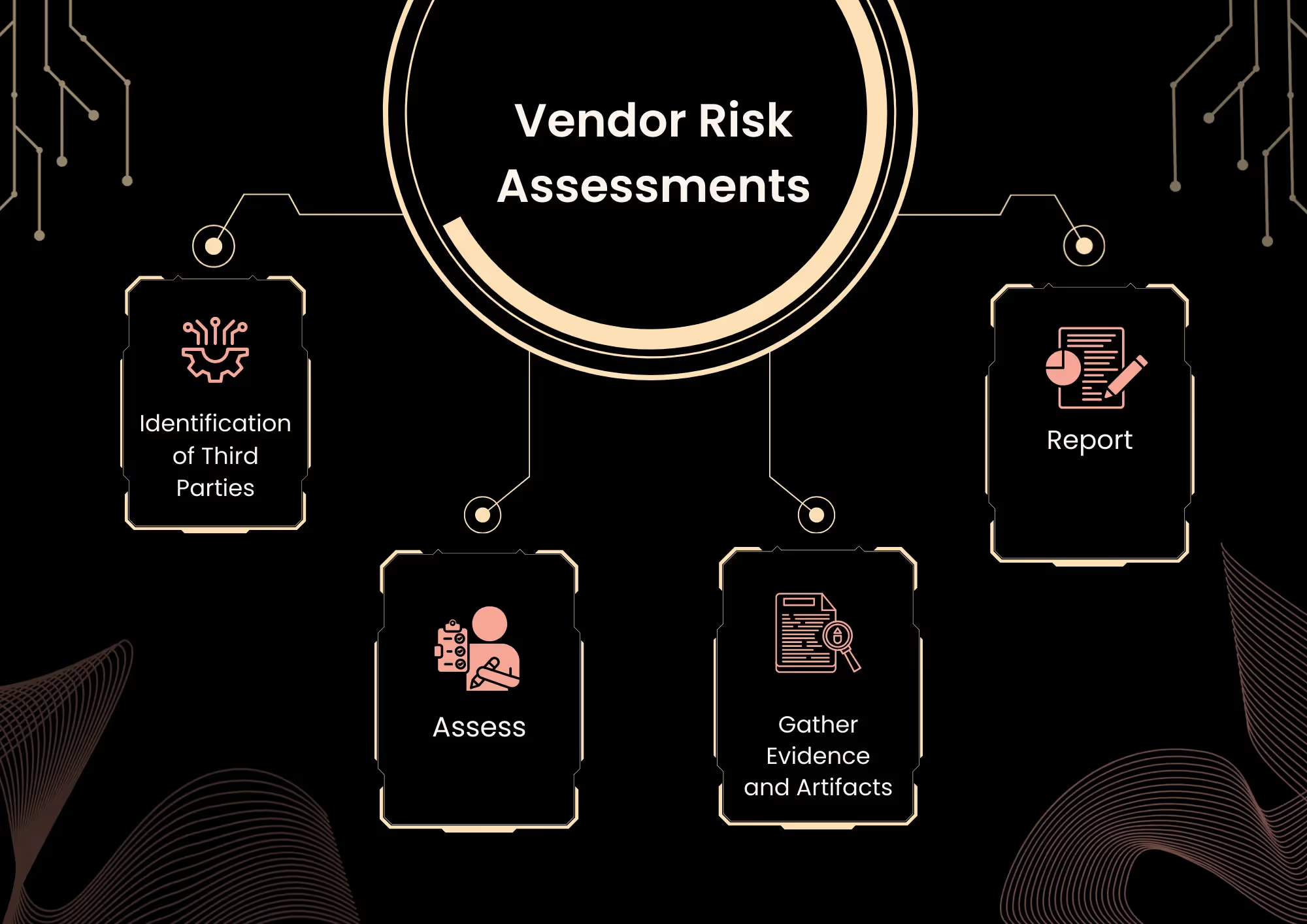
Why Vendor Risk Assessments / Benefits
- Cybersecurity defence: Third-party risk assessments act as a proactive defence against cyberattacks. By scrutinising a vendor’s security posture, you can identify and mitigate risks before a hacker can exploit them. This protects you from potentially devastating events, such as data breaches, which can result in significant financial losses and legal action.
- Regulatory compliance: Most modern data protection and privacy regulations, such as GDPR, HIPAA, and CCPA, hold organisations accountable not only for their own security but also for the security of their vendors. Failing to properly vet a third party can result in steep fines and legal penalties.
- Business continuity and reputation: When a key vendor experiences an outage or a security incident, your business operations can grind to a halt. By assessing the operational and financial health of your vendors, you can ensure they can reliably deliver on their services, preventing costly disruptions and protecting your reputation with customers and partners.
Cyberverse Approach
Cyberverse delivers third-party risk management (TPRM) solutions that are embedded into day-to-day business functions while aligning to industry and regulatory expectations. We identify cost savings, improve process efficiency, and mitigate today’s most critical risks.
Successful TPRM drives value by helping business leaders gain visibility into and understanding of the impact third parties have on profitability, efficiency, and compliance, while ensuring your organisation's ecosystem has the resilience to withstand new and unexpected challenges and manage vendor risks.
- Identify your “critical” third-party vendors.
- Separate "critical” vendors.
- Determine which regulations apply to each third-party vendor.
- Identify primary risks associated with each third-party vendor.
- Send third-party risk assessments.
- Collaborate efficiently with third-party vendors to expedite assessment completion.
Our process includes:
- Evaluate the risks associated with each supplier based on the predefined criteria and assessment parameters.
- Conduct on-site audits or inspections of critical suppliers, especially those with high-risk profiles. These assessments can provide a deeper understanding of their operations and practices.
- Implement a system for ongoing monitoring of supplier performance and risk. Regularly review supplier data, conduct periodic assessments, and track key performance indicators (KPIs).
- Develop strategies for mitigating supplier risks. These strategies can include diversifying the supplier base, negotiating better contract terms, establishing contingency plans, or seeking alternative suppliers.
- Ensure that supplier contracts include clear terms and conditions for risk management, compliance, quality standards, and dispute resolution.
- Ensure the supplier risk assessment process aligns with relevant regulations and industry standards for your industry and region.