

Business managers are required to make complex decisions that may significantly influence overall business expansion. Occasionally, unexpected events or disruptions can provoke adverse effects. Conducting a business impact analysis helps your organisation mitigate these concerns. By assessing the potential repercussions of an event or decision, your enterprise can forecast outcomes and recover effectively from setbacks.
A Business Impact Analysis (BIA) service offering facilitates organizations in the identification of critical functions, the assessment of disruption impacts- including financial, operational, and reputational aspects- and the establishment of recovery priorities (RTOs/RPOs) essential for developing comprehensive Business Continuity Plans (BCPs) and Disaster Recovery Plans (DRPs). Such services typically encompass guided workshops, utilisation of digital tools, risk assessments, and testing procedures such as tabletop exercises, all aimed at producing actionable reports. These measures collectively ensure operational resilience and compliance against a variety of threats, ranging from cyber incidents to pandemics.
A business impact analysis constitutes a crucial element of an organization's business continuity plan. It encompasses details regarding essential information systems and incorporates a planning segment that delineates strategies aimed at mitigating risks.
Why Business Impact Analysis / Benefits
- Identify essential business activities and resources.
- A BIA helps you understand which processes are necessary to deliver your most important products and services—so you know which activities must be performed, regardless of the circumstances.
- Analyse the financial impacts of business disruptions.
- When you understand how potential roadblocks could affect company finances, you can proactively plan and allocate funds to address unexpected disruptions as they arise. With a BIA, you can understand resource requirements, justify budget requests, and pitch your business continuity plan (BCP) to leadership.
- Collect the data you need to create a business continuity plan.
- A business continuity plan lays out strategies to prevent and respond to business disruptions. To plan your response, you first need to understand how those disruptions will impact your business.
- Actionable Reports
- Clear documentation of critical functions, dependencies, and recovery strategies.
- Enhanced Resilience
- Proactive preparedness for disruptions, minimising downtime and financial loss.
- Regulatory Compliance
- Meeting governance, risk, and compliance (GRC) mandates.
- Informed Decision-Making
- Data-driven insights for resource allocation during crises.
Cyberverse Approach
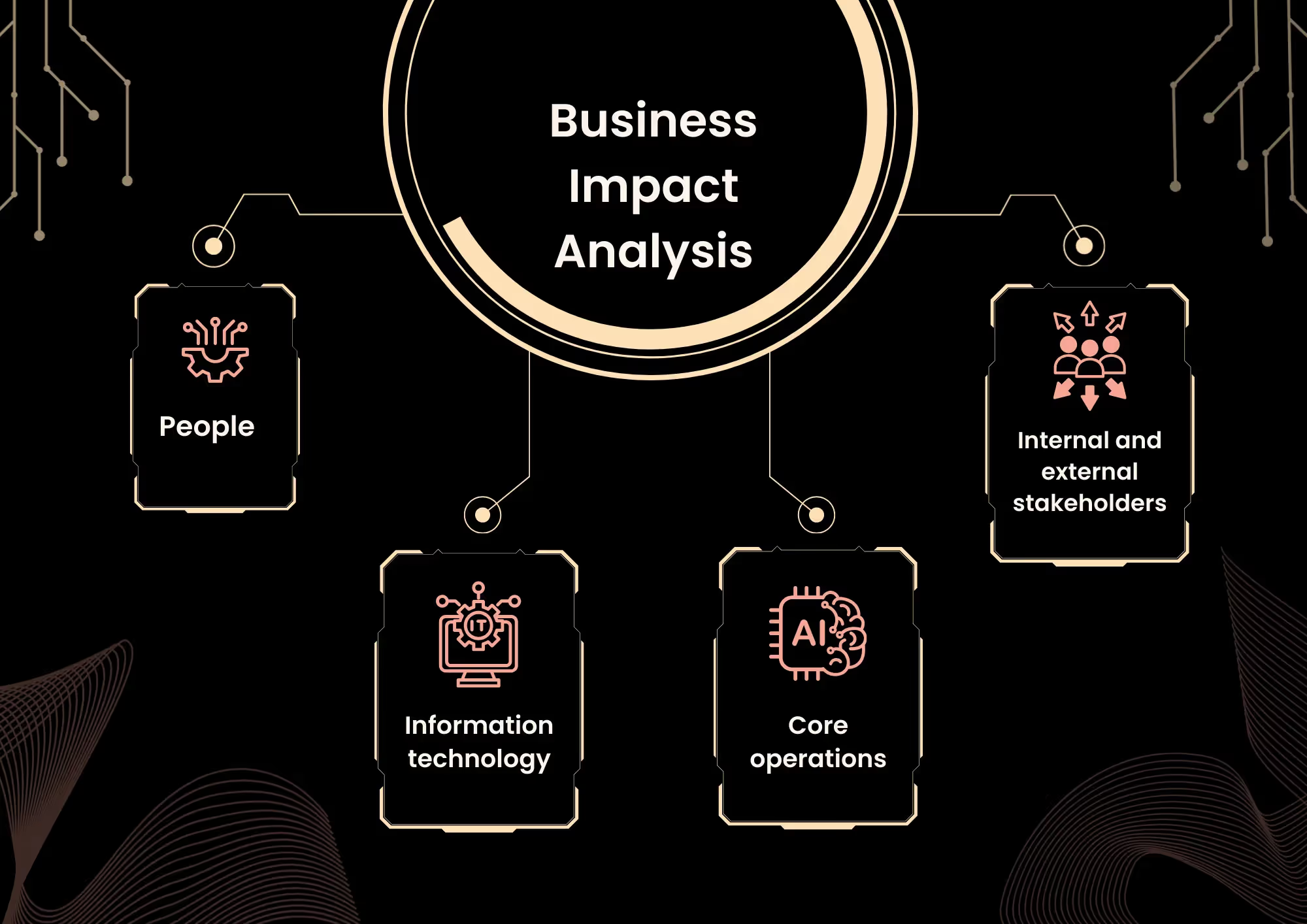
Initiating a business impact analysis (BIA) begins with forming a team of essential personnel from various departments within your organisation. These stakeholders provide valuable insights into critical functions and processes, thereby offering a comprehensive perspective on potential risks.
At Cyberverse, our approach for facilitating and capitalising on an enhanced BIA revolves around the best practices and globally accepted standards such as ISO 22301:2019 - Business Continuity Management Systems and ISO 22317:2015 - Guidelines for Business Impact Assessment:
- Assemble Team
- Identify Critical Business Functions
- Determine the impact of disruptions
- Establish Recovery Time Objectives (RTOs)
- Analyse dependencies
- Identify mitigation strategies
- Findings and Recommendations