


Organisations today operate in an increasingly complex threat environment where cybersecurity attacks and associated incidents are commonplace. Breaches of corporate and government systems and information occur more regularly, with greater sophistication and severity than ever. These incidents often lead to significant and ongoing business impacts long after they occur.
Security incidents can have a significant impact on a business, its customers, and its supply chain, including direct costs associated with recovery efforts, but often more devastating costs associated with reputational damage, costly remediation activities, and increased regulatory scrutiny and reporting obligations.
An organisation’s ability to respond appropriately to a cybersecurity incident is a critical capability that must be developed. Like business continuity and disaster recovery, cyber security incident management requires a well-thought-out strategy and plan, along with the associated people, processes, and technology capabilities to support it.
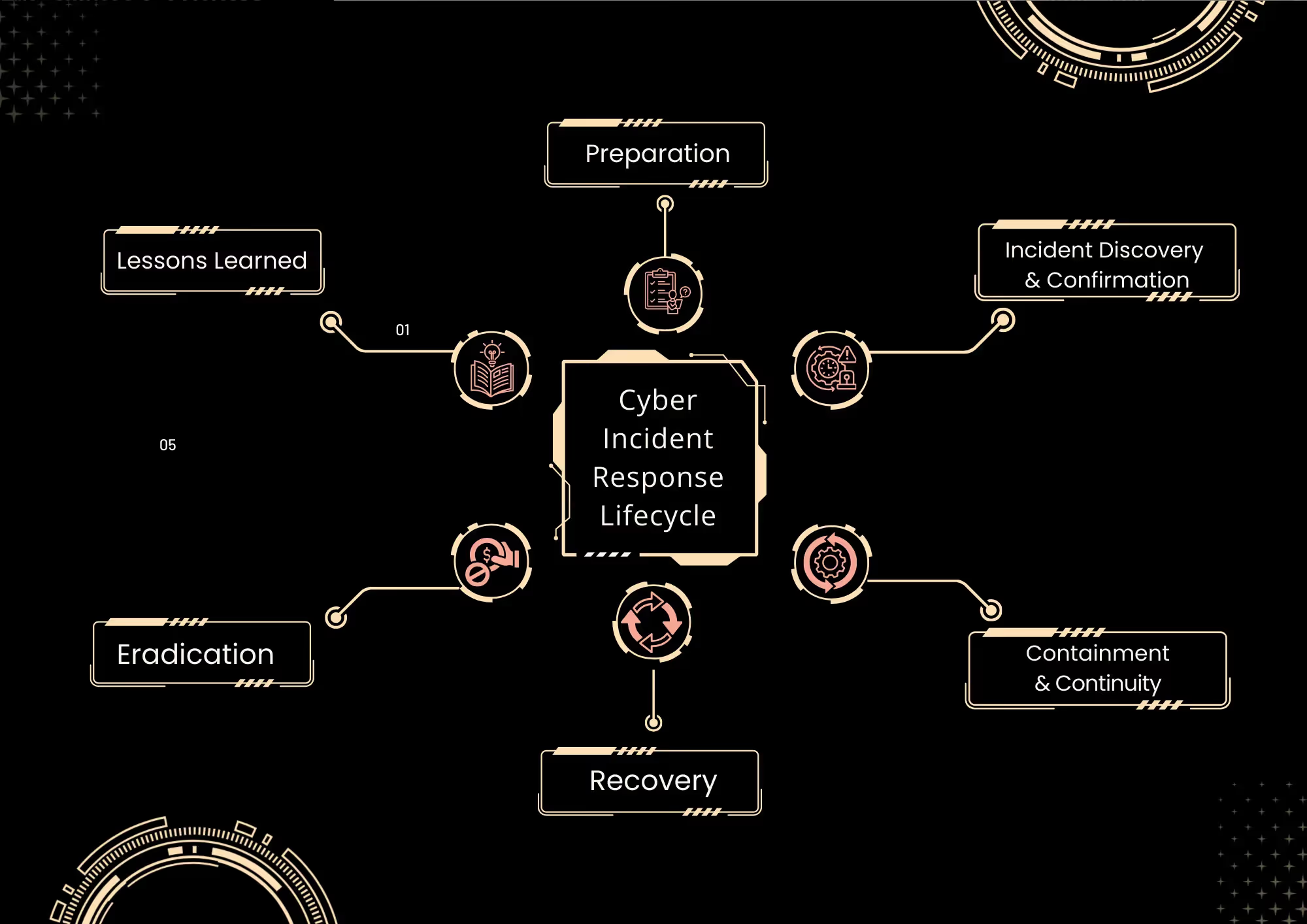
An Incident Response Plan (IRP) is a strategic approach that helps organisations effectively manage and respond to security incidents. It outlines the steps and procedures to be followed when a cybersecurity event occurs, aiming to minimise damage and reduce recovery time. Key components typically include detection, containment, eradication, recovery, and lessons learned.
The plan involves collaboration among various stakeholders, including IT, legal, and communications teams, to ensure a coordinated, swift response to incidents such as data breaches or cyberattacks. Developing and regularly testing an IRP is crucial for businesses to enhance their overall cybersecurity posture and resilience.
An incident response plan better prepares an organisation for managing different types of cyber threats. The goal is to minimise the impact of a cyber incident to protect sensitive data and limit disruptions to business continuity.
The incident response plan outlines your organisation’s procedures to guide the response during a security or data breach. This enables your business to respond quickly and effectively to an incident and return to business-as-usual as quickly as possible.
Once you have an incident response plan, it’s essential to test it and refine it to ensure efficiency and reliability. This is where tabletop exercises come in.
An incident response tabletop exercise is a simulation we use to evaluate your organisation’s response to a hypothetical cyber incident, such as a data breach, without requiring significant resources or risking your business. We typically perform these exercises with executives and board members.
Tabletop exercises allow an organisation to identify gaps in knowledge, communication and coordination. By involving actual stakeholders, testing exercises help people in your organisation better understand their roles and responsibilities, enabling them to refine their strategies and enhance their overall preparedness for a real-life event.
Why Tabletop Exercises / Benefits
- Risk and impact reduction
- Limits damage and downtime by enabling faster containment and recovery during incidents.
- Lowers financial loss, regulatory exposure, and reputational harm through structured, repeatable actions.
- Faster, more coordinated response
- Cuts response time by clarifying roles, decision paths, and escalation before crises occur.
- Improves cross‑team coordination and communication so technical, legal, comms, and executives act in sync.
- Better use of people and tools
- Avoids wasted effort and duplication by standardising incident triage, handling, and documentation.
- Ensures the right tools, logs, and resources are available and used effectively during an incident.
- Continuous improvement and assurance
- Identifies gaps in controls, monitoring, and playbooks through tabletop exercises and simulations.
- Drives plan updates, strengthens security posture, and demonstrates due diligence to boards, customers, and regulators.
Cyberverse Approach
Cyberverse provides expert advisory services to assist our customers across the many facets of incident response planning and offers mature, proven experience and services in developing Cyber Security Incident Response Plans and associated capabilities. These extend throughout the lifecycle of incident management, including:
- Development of Cybersecurity Incident Response Plans.
- Development of playbooks required to respond to specific incident scenarios, such as Data Breach or Ransomware attacks.
- Development of Communications plans and processes.
- Training and awareness for incident responders and general users.
- Testing Cyber Security Incident Response Plans through scenario-based testing and role-playing.