

Real-world incidents unfold chaotically and carry high stakes, while tabletop exercises provide a safe environment to build muscle memory for crisis decisions, identify hidden policy gaps, and improve inter-team handoffs without disrupting operations. Unlike technical drills, these focus on human and process factors—crucial since 95% of breaches involve human error—and use exercise data to inform targeted improvements such as policy revisions or training. This cost-effective approach (typically delivered for under $5,000) delivers a high return on investment by helping prevent failures that cost millions.
Tabletop exercises are simulated scenarios that guide participants through the steps to identify, manage, and mitigate cybersecurity incidents. Unlike live simulations, these exercises are conducted in a controlled, discussion-based format, making them accessible and low-risk while still providing valuable insights. By working through realistic scenarios, participants gain a deeper understanding of their roles, identify gaps in current response plans, and refine their decision-making processes.
Tabletop exercises allow an organisation to identify gaps in knowledge, communication and coordination. By involving actual stakeholders, testing exercises help people in your organisation better understand their roles and responsibilities, enabling them to refine their strategies and enhance their overall preparedness for a real-life event.
By working through realistic scenarios, participants gain a deeper understanding of their roles, identify gaps in current response plans, and refine their decision-making processes.
Why Tabletop Exercises / Benefits
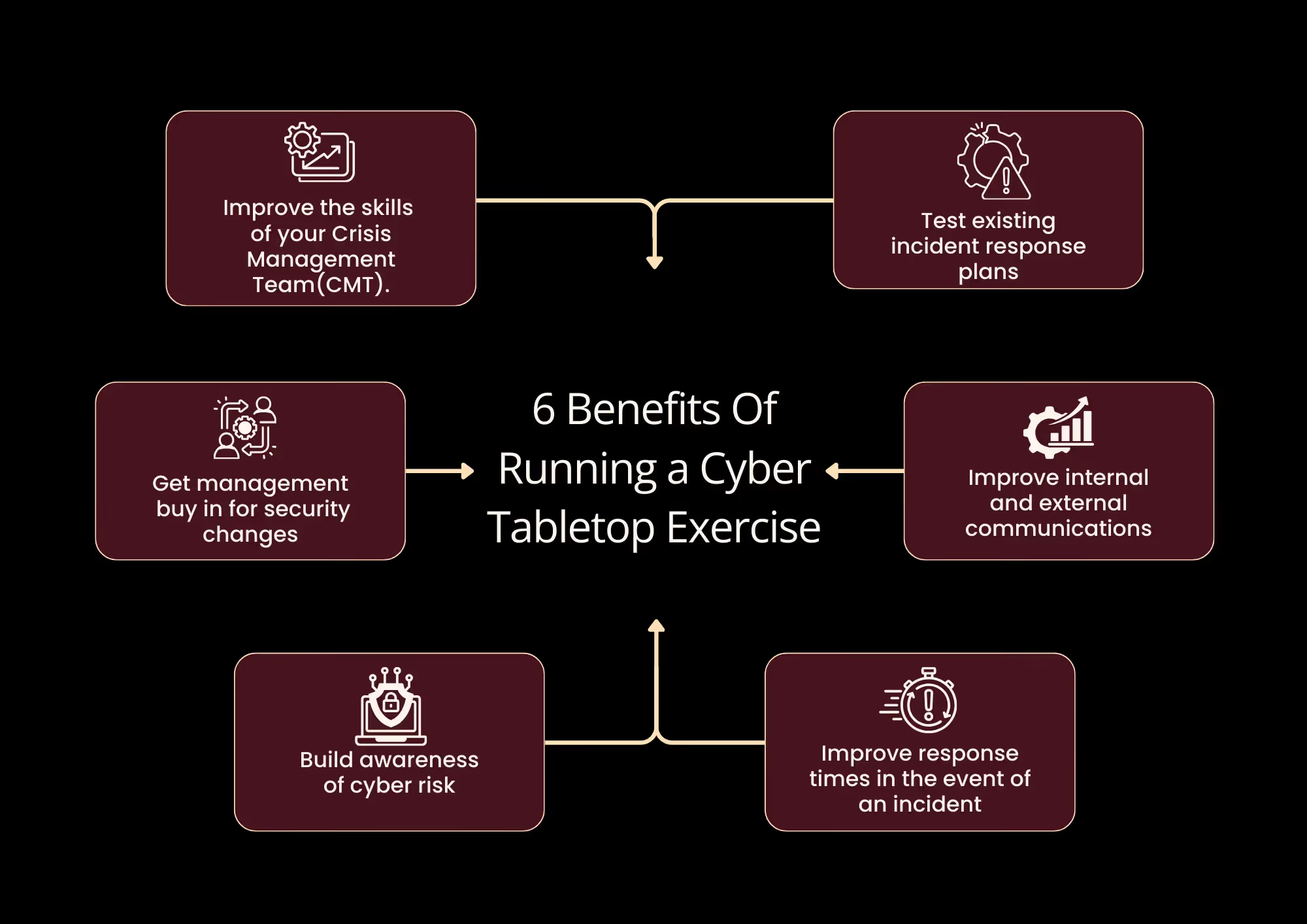
- Response Improvement: Exercises validate and refine incident response plans, uncovering gaps in procedures or resource needs before real attacks occur. Teams practice decision-making under simulated pressure, building muscle memory that accelerates recovery and reduces downtime during real incidents.
- Collaboration and Awareness: Cross-functional participation reveals communication breakdowns among IT, legal, executives, and other teams, thereby improving handoffs. Heightened threat awareness spreads organisation-wide, from staff to leadership, promoting a proactive security culture.
- Gap Identification: Weaknesses in policies, roles, training, or tools surface safely, enabling targeted fixes like playbook updates or vendor contracts. Hidden assumptions about timelines, costs, or external dependencies (e.g., regulators, insurers) become visible for remediation.
- Compliance and Cost Savings: Documentation from exercises supports audits for ISO 27001, NIST, GDPR, and similar frameworks, demonstrating preparedness. Low-cost sessions (often under $5,000) prevent multimillion-dollar breaches by minimising errors and financial fallout.
Cyberverse Approach
In today’s swiftly changing threat environment, organisations need to be ready to respond promptly to cyber incidents. Cyberverse Tabletop Exercises offer an interactive, practical way to improve your organisation’s readiness by testing incident response strategies and building your team’s confidence in managing real threats. Created for staff, executives, and board members, these exercises are customised to address the specific challenges and responsibilities of each group, ensuring thorough preparedness across your organisation.
- Define Objectives and Scope
- Select scenario & Participants
- Develop materials
- Facilitate Discussions
- Encourage Collaboration
- Maintain focus
- Debrief immediately
- Assign follow-ups
- Iterate
Our Offerings
- Strategic-Level Exercises: Highlight strategic considerations, including regulatory compliance, reputational risk, and financial impact. Scenarios are designed to improve governance and oversight during a cybersecurity event.
- Tactical-Level Exercises: Equip leadership with the knowledge to manage high-pressure situations, make informed decisions, and minimise business disruption. Scenarios may include ransomware attacks, data breaches, or public relations challenges.
- Operational-Level Exercises: Help employees recognise cyber threats, escalate incidents appropriately, and follow established response protocols. Scenarios may include phishing attacks, malware infections, or insider threats.