

Audits are commonly used to ensure that an activity meets defined criteria. For all ISO management system standards, audits are used to ensure that the management system meets the relevant standard’s requirements, the organisation’s own requirements and objectives, and remains efficient and effective. It will be necessary to conduct audits to confirm this.
Internal audit is an integral part of good governance and assurance. Internal audit aims to help organisations achieve their objectives and thereby enhance and protect value.
Internal auditors work with management to systematically review systems and operations. Internal auditors act as objective consultants, advising you on how to improve processes, especially those related to risk management, governance, fraud, and internal controls.
There are many reasons for auditing ISO Standards:
- The standard requires it – Clause 9.2 Internal audit mandates a program of internal audits.
- To ensure that the Management System is adequately implemented and operated.
- To ensure that the Management System meets the requirements of the standard.
- To ensure that the Management System meets the organisation’s requirements.
- To ensure that the Management System meets the objectives set by the organisation against Clause 6.2 and plans to achieve them.
- To ensure that the Management System is effective in reducing risks to a tolerable level.
- Ensure that any nonconformities and corrective actions are addressed promptly.
- Ensure that weaknesses, events, and incidents are reported, managed, and resolved effectively and efficiently.
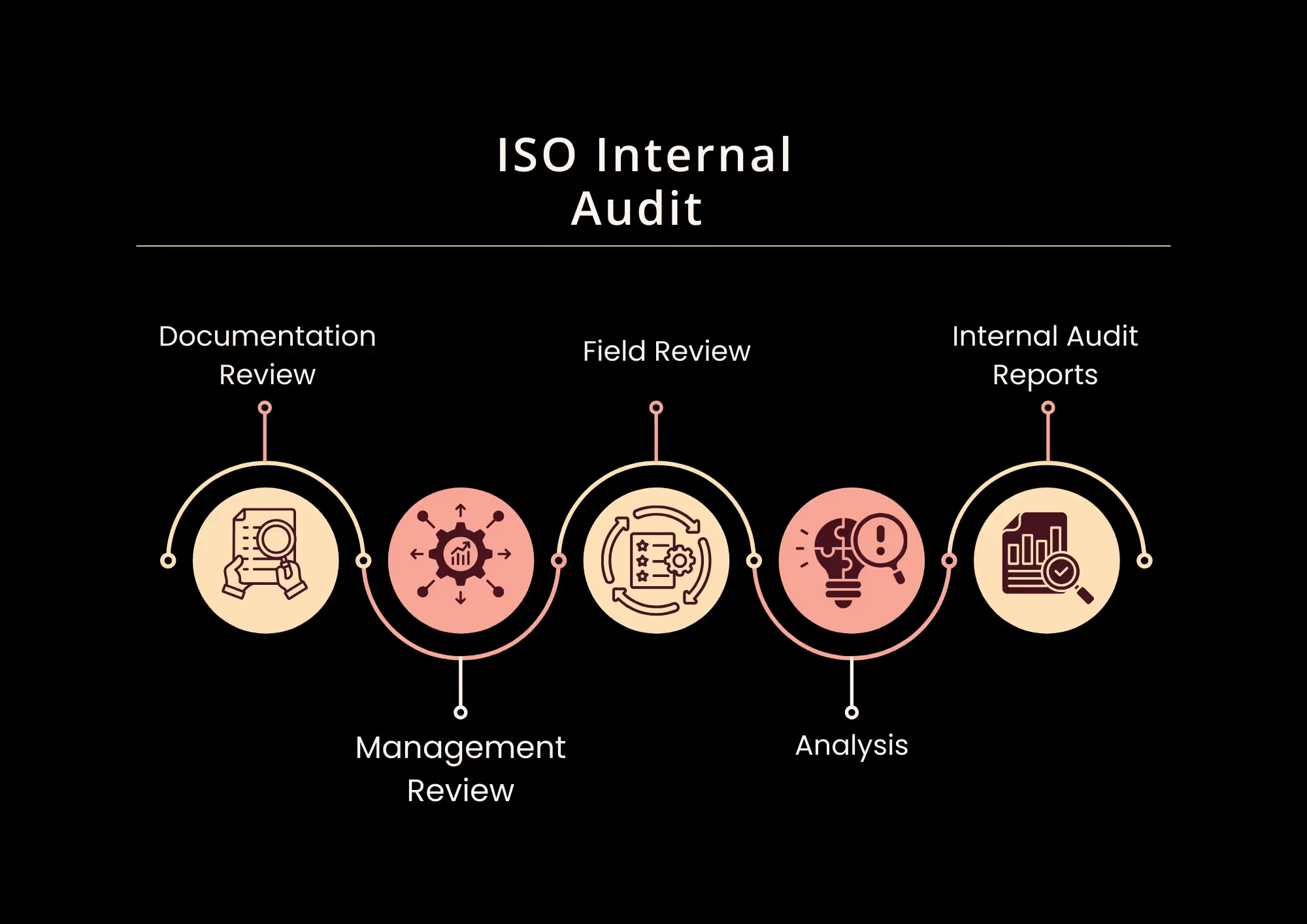
Why ISO Internal Audit / Benefits
- Objective evaluation: Internal audits provide objective and impartial insights into the functioning of your ISMS.
- Discover non-conformities and oversights: Conducting internal audits helps you discover lapses, non-conformities, and oversights in your ISMS, policies, procedures, security controls, and other documentation.
- Allow time to remediate: It gives organisations time to remediate control gaps and nonconformities before their certification audits.
- Continual improvement: Internal audits monitor how the ISMS maintains compliance with ISO standards and, therefore, enable continual improvement.
- Management buy-in: Since the internal audit report is presented to the management, it demonstrates management buy-in and commitment to maintaining the organisation’s infosec posture.
- Employees’ participation and awareness: Internal audits highlight how organisations communicate their processes and procedures to employees and how well their security culture is embedded among their people.
Cyberverse Approach
Cyberverse offers business-experienced professionals to provide insightful, innovative, directive and industry-leading thinking.
- Audit Preparation
- Conducting the Audit
- Field Review
- Analysis
- Internal Audit Report
- Follow Up
What We Offer
- ISO 9001 / 14001 / 45001
- ISO 20000
- ISO 22301
- ISO 27001 / 27002 / 27701
- ISO 31000
- ISO 42001