


The escalating complexity and extensive scope of the threat landscape, coupled with the heightened digitalisation of business operations, necessitate the implementation of enhanced security measures across organisations of all sizes. Consequently, a defence-in-depth strategy is imperative, focusing on risk mitigation and cultivating a security-aware culture to safeguard personnel and assets, while ensuring operational continuity to support the achievement of organisational objectives.
Cybercrime is widespread, with financial theft remaining the primary motive for many attacks. Additionally, phishing, ransomware, and stolen credentials constitute over 80% of all reported incidents, according to recent OAIC breach notification data.
A cyber strategy and roadmap provide a comprehensive, systematic plan to transition an organisation from its current security posture to a desired, risk-informed future state. It aligns business objectives with pragmatic security initiatives, outlining the necessary actions, their sequence, and the rationale. By setting priorities, timelines, and responsibilities, the strategy and roadmap give executives and stakeholders a transparent overview of how cybersecurity investments will mitigate risks, ensure compliance, and foster organisational growth.
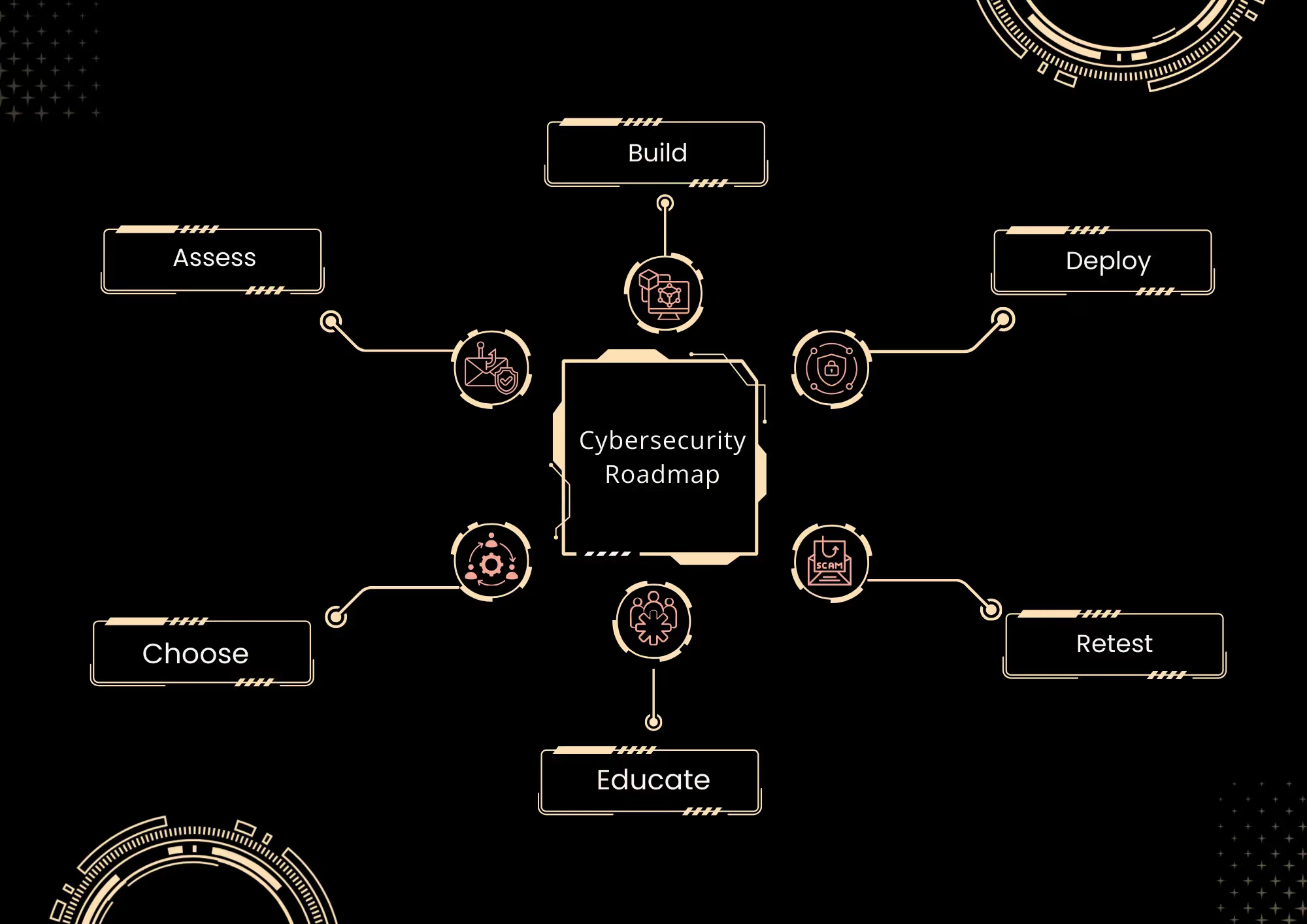
Why Cyber Strategy & Roadmap / Benefits
- Business and investment benefits
- Aligns cybersecurity initiatives with business goals, so spending clearly supports growth, digital transformation, and market expansion.
- Reduces wasted investment by prioritising the right capabilities, avoiding overlapping tools and fragmented projects.
- Makes costs more predictable and defensible through phased, planned security uplift rather than emergency fixes.
- Risk reduction and resilience
- Lowers the likelihood and impact of breaches by systematically addressing the highest risks first.
- Provides a clear playbook during incidents, improving response speed and recovery time when issues arise.
- Builds long-term resilience across people, process, and technology, rather than relying on point solutions.
- Governance and stakeholder confidence
- Provides executives and boards with transparent visibility into the current posture, priorities, and progress over time.
- Demonstrates due diligence to regulators, customers, and partners by showing a documented, evolving plan.
- Embeds cybersecurity as a strategic enabler, strengthening trust and supporting a secure-by-design culture.
Cyberverse Approach
At Cyberverse, we help organisations establish a holistic cyber strategy programme that aligns with their business needs and risks. We engage stakeholders across your organisation, help you measure and reduce cyber risks, and provide options you can act on.
Our Cyber Strategy and Roadmap offering delivers a customised methodology and approach tailored to your organisation’s priority objectives. By completing the following phases, we’ll know what you need and the most efficient way to protect what matters.
- Determine key risks and threats through a business, industry and competitor lens.
- Identify an organisation's risk appetite based on executive stakeholder inputs.
- Determine the current technology environment.
- Understand the compliance landscape applicable to the organisation.
- Conduct visioning workshops with executive stakeholders to understand the desired target state of the cyber program.
- Understand the hopes, fears and legacy that drive the vision and mission of the cyber function.
- Compare with industry peers to gain perspective on typical security capabilities, IT and security headcount, IT and security budgets, etc.
- Define a cyber strategy that aligns with business priorities and the cyber program's vision and mission.
- Develop an actionable three- to five-year roadmap that enables the organisation to progress toward its target state.